


HO CHI MINH CITY SHAPES ITS VISION AS AN INTEGRATED INTERNATIONAL LOGISTICS SERVICES CENTER

vlimonamedia
26/11/2026


Developing Ho Chi Minh City into an international logistics services hub is not simply a matter of expanding seaport, warehousing, or transport infrastructure. It also requires building an integrated logistics ecosystem capable of connecting and coordinating supply chains while providing regional-level value-added services.
On November 25, 2026, the Ho Chi Minh City Department of Industry and Trade organized a seminar entitled “Developing Ho Chi Minh City into an International Logistics Services Center,” with the participation of representatives from the Ministry of Industry and Trade, state management agencies, experts, associations, educational institutions, and the logistics business community.
The seminar focused on discussing planning orientations, development models, policy mechanisms, and solutions to effectively leverage the city’s logistics advantages within its expanded economic landscape.
From a Cargo Gateway to a Supply Chain Coordination Hub
Following its merger with Binh Duong and Ba Ria–Vung Tau, Ho Chi Minh City now has a much larger development space, connecting industrial centers, deep-water seaport systems, airports, transport networks, and large-scale consumer markets.
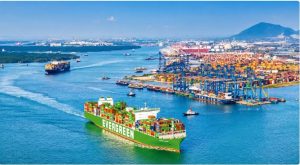
Notably, the Cai Mep–Thi Vai port complex continues to strengthen its position in the international maritime network. According to information presented at the seminar, cargo throughput across the city’s port system reached nearly 356 million tonnes.
However, advantages in geographical location, infrastructure, and cargo volume alone are not sufficient to transform the city into an international logistics hub. Key requirements include improving multimodal connectivity, restructuring the network of logistics centers, inland container depots (ICDs), and warehouses, strengthening the capabilities of logistics enterprises, and developing higher value-added services.
A key strategic direction is to transform the city’s role from a gateway for receiving and transshipping cargo into a hub capable of organizing, connecting, and coordinating the flows of goods, services, information, and resources across regional supply chains.
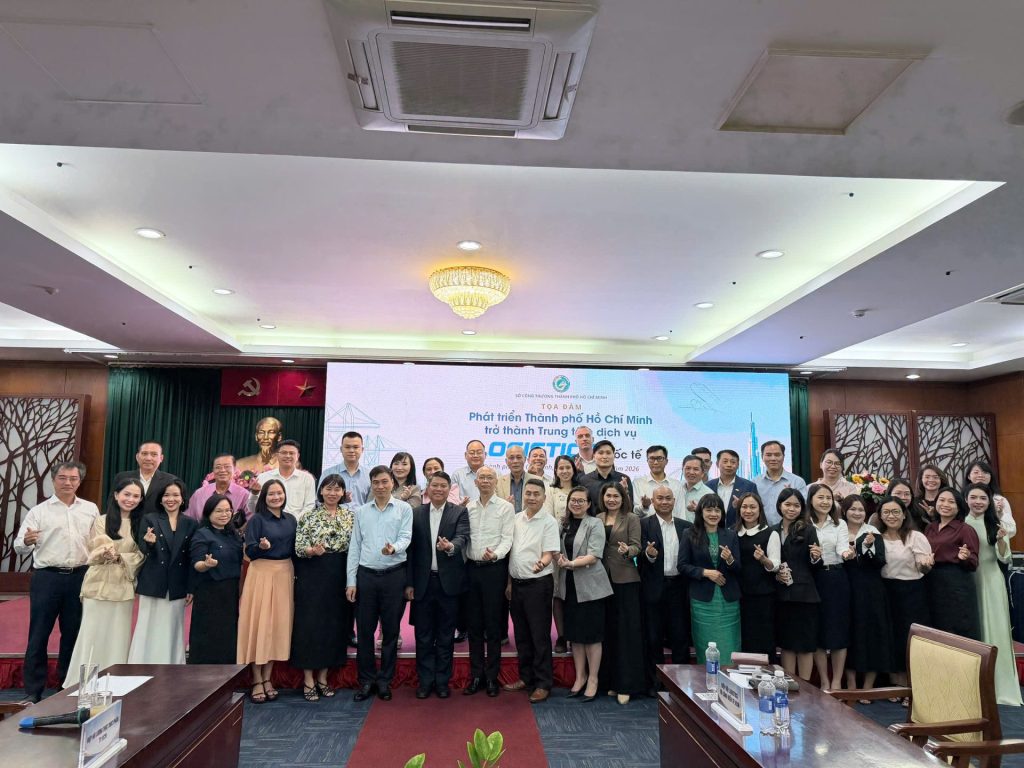
Representatives of the Ministry of Industry and Trade and delegates attending the event.
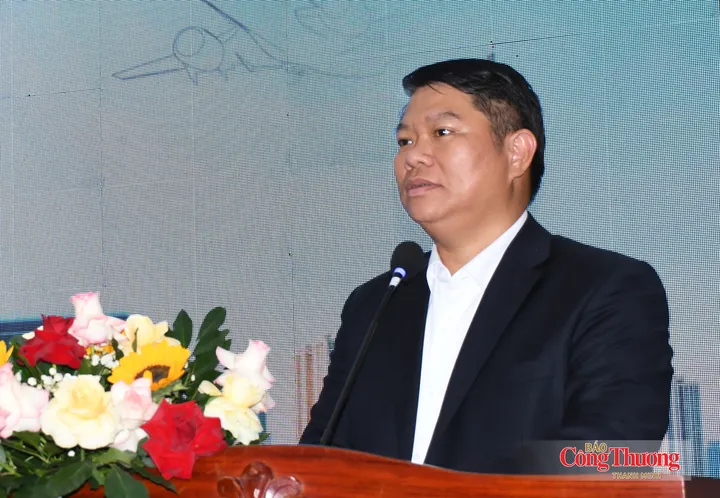
Mr. Le Van Danh, Deputy Director of the Ho Chi Minh City Department of Industry and Trade, delivered the opening remarks and presented the keynote report entitled “Ho Chi Minh City Towards Becoming an International Logistics Services Center – Requirements and Key Issues.”
He emphasized that logistics is a key strategic priority, as reflected in the Vietnam Logistics Services Development Strategy for the 2025–2035 period, with a vision to 2050, and the City’s Action Plan.
According to Mr. Le Van Danh, the current priority is not simply to expand the scale of logistics services, but to build logistics capabilities to organize, connect, and coordinate the flows of goods, services, information, and resources throughout the supply chain.
Proposing an Integrated Logistics Center Model
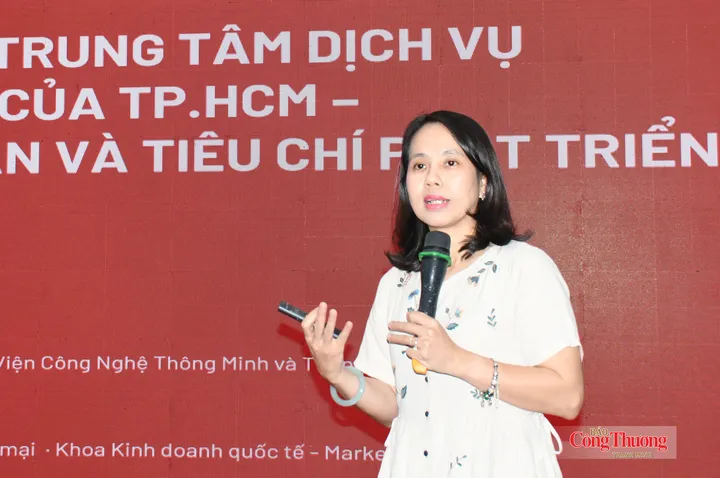
At the seminar, Assoc. Prof. Dr. Trinh Tu Anh, Director of the Institute of Smart City and Management at the University of Economics Ho Chi Minh City (UEH), stated that an international logistics center should not simply be a large-scale seaport, but rather a hub for developing and providing services that coordinate regional cargo flows.
The proposed development model follows an integrated, multi-layered approach, comprising:
- Physical infrastructure: Seaports, inland container depots, warehouses, logistics centers, and connecting transport networks.
- Institutional framework: Operational mechanisms for the Free Trade Zone and policies supporting international logistics activities.
- Value-added services: 3PL, 4PL, and 5PL logistics services, distribution, supply chain management, and trade facilitation.
- Digital infrastructure: Shared data, digital platforms, and technology applications for managing and coordinating logistics operations.
- Coordination core: Governance, human resources, and specialized knowledge.
Under this model, the Cai Mep Ha Free Trade Zone, together with the deep-water port complex, is being considered as the potential centerpiece. The proposals also highlight the importance of policy sandbox mechanisms, an inter-agency coordination focal point, and the development of a digital twin to support the coordination of the Cai Mep–Can Gio–Cat Lai logistics clusters.
Logistics Spatial Planning and Strengthening Multimodal Connectivity
Under the plan currently being studied as part of the Ho Chi Minh City Master Plan for the 2025–2050 period, with a 100-year vision, the logistics system is proposed to be developed across three spatial layers, five multimodal logistics corridors, and a network of logistics centers and zones classified by function, scale, and location.
The objective is to establish a modern logistics network that efficiently connects seaports, industrial parks, production centers, and consumer markets.
One of the current bottlenecks is the continued heavy reliance on road transport, while rail, inland waterway, and other modes of transport have yet to realize their full potential. In addition, logistics costs remain high, value-added services are not yet commensurate with market needs, and the presence of leading international logistics enterprises remains limited.
Therefore, the coordinated development of transport corridors, stronger regional connectivity, and more effective utilization of the seaport system are considered essential to enhancing the competitiveness of the entire logistics system.

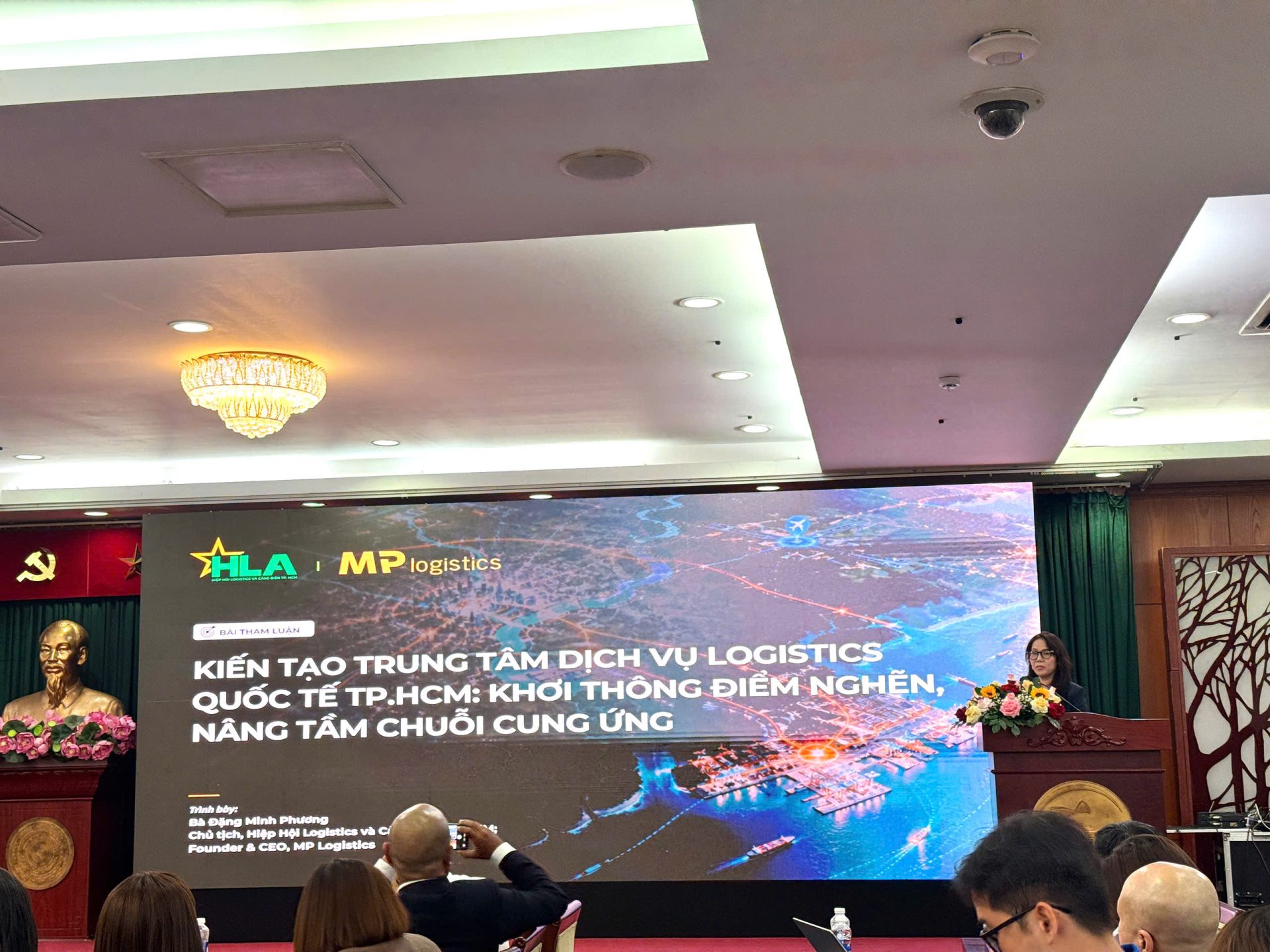
Ms. Dang Minh Phuong, Chairwoman of the Ho Chi Minh City Logistics and Seaports Association, proposed that the center should be developed as an ecosystem of value-added services, capable of coordinating regional cargo flows, trade, and finance. The model would be built on three pillars: multimodal transshipment and distribution; high-value supply chain services through 3PL, 4PL, and 5PL; and global support services.
She recommended integrating the logistics vision into the City’s master plan and seaport development plan; accelerating rail, inland waterway, and ring road connections to seaports; and promoting green financing, workforce training in digital logistics, maritime and finance, as well as international cooperation.
Human Resources, Digital Transformation, and Value-Added Services as Key Drivers
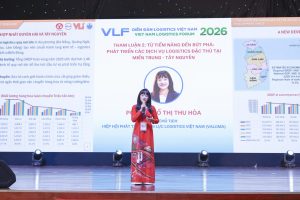
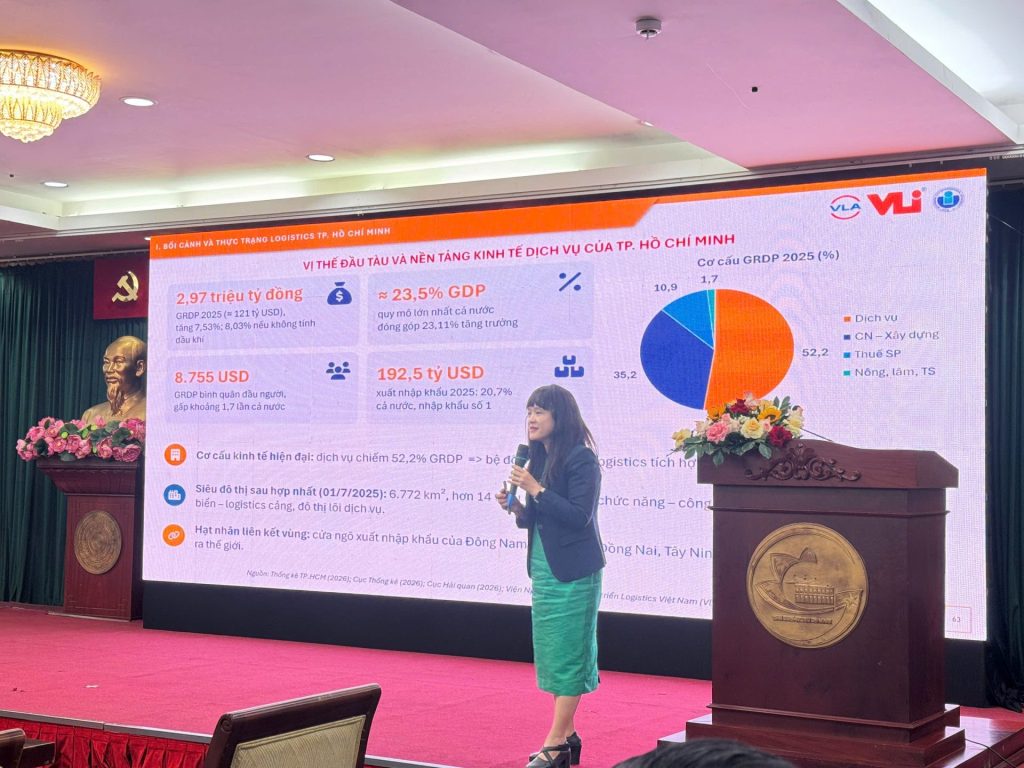
At the event, Assoc. Prof. Dr. Ho Thi Thu Hoa, Acting Dean of the Faculty of Engineering and Industrial Management and Head of the Logistics and Supply Chain Management Department at the International University, Vietnam National University Ho Chi Minh City; Senior Advisor to the Vietnam Logistics Research and Development Institute (VLI); and Vice Chairwoman of the Vietnam Logistics Human Resources Development Association, delivered a presentation on value-added services, attracting businesses, and connecting international supply chains.
These topics highlight the increasingly important role of professional expertise, a highly skilled workforce, and the ability to provide specialized logistics services in elevating the city’s position as an international logistics center.
According to the development orientation for Vietnam’s logistics center network towards 2035, with a vision to 2050, presented by a representative of the Ministry of Industry and Trade at the seminar, Vietnam aims to establish at least five modern, internationally competitive logistics service centers by 2035 and at least ten by 2050.
Digital transformation and green logistics have also been identified as cross-cutting standards throughout the development process. The State will play an enabling role in developing institutions, connectivity infrastructure, data systems, and human resources, while businesses will serve as the primary drivers of investment in infrastructure, equipment, and technology.
Towards a Competitive International Logistics Ecosystem
Developing Ho Chi Minh City into an international logistics services center is a strategic direction closely linked to the need to enhance business competitiveness, promote regional connectivity, and strengthen Vietnam’s position in global supply chains.
To achieve this goal, the City needs to implement a coordinated set of solutions covering logistics spatial planning, multimodal infrastructure connectivity, institutional improvements, the development of value-added services, digital transformation, green logistics, and human resource training.
In particular, cooperation among state management agencies, associations, research and training institutions, and the business community will play a crucial role in building an integrated, modern, and sustainable logistics ecosystem.
This will also provide a foundation for Ho Chi Minh City to leverage its advantages in seaport clusters, industrial systems, and international trade networks, gradually establishing itself as a key logistics hub in Southeast Asia.
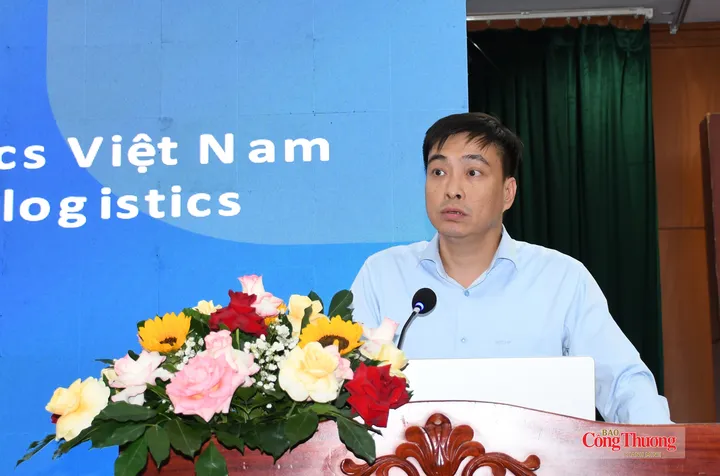
Dr. Bui Nguyen Anh Tuan, Deputy Director General of the Agency for Domestic Market Surveillance and Development under the Ministry of Industry and Trade, presented the proposed orientation for developing the Vietnam Logistics Center Network Development Scheme towards 2035, with a vision to 2050. His presentation also addressed the criteria for classifying and grading logistics centers under Circular No. 71/2026/TT-BCT, highlighting Ho Chi Minh City’s role and opportunities within the national logistics network.
Strategic Orientations for Developing an International Logistics Center in Ho Chi Minh City
Under the Vietnam Logistics Services Development Strategy, by 2035, Vietnam aims to establish at least five modern, internationally competitive logistics service centers, rank among the world’s top 40 countries in the Logistics Performance Index (LPI), and reduce logistics costs to approximately 12–15% of GDP. With a vision to 2050, the country aims to develop at least ten modern logistics centers meeting international standards.
The draft National Scheme for Logistics Center Development adopts a cargo-flow-oriented approach, organizing the logistics system around economic spaces, logistics corridors, growth poles, and international trade gateways. Under this approach, the State will play an enabling role in developing institutions, connectivity infrastructure, data systems, and human resources, while businesses will serve as the primary drivers of investment in core infrastructure, equipment, and technology. Digital transformation and green logistics are identified as cross-cutting standards throughout the entire development process.
Within this strategic framework, Ho Chi Minh City is positioned as the core of the Southeast Region’s logistics growth pole and one of the country’s key international logistics hubs. Its development advantages stem from its expanded economic space, plans to establish a Free Trade Zone, the Cai Mep–Thi Vai port complex, strategic infrastructure projects, and its connectivity with Dong Nai, the Southwest region, and ASEAN trade corridors.
The Ministry of Industry and Trade representative emphasized that the goal should go beyond developing individual logistics facilities and focus instead on establishing a comprehensive international logistics ecosystem. This ecosystem requires suitable land availability, multimodal transport connectivity, interconnected data systems, and effective regional coordination mechanisms.
During the panel discussion entitled “From International Experience to a Ho Chi Minh City Model: What Does Ho Chi Minh City Need to Do to Become an International Logistics Services Center?”, representatives from the Agency of Foreign Trade under the Ministry of Industry and Trade, the Ho Chi Minh City Department of Industry and Trade, research institutions, logistics and seaport associations, and the business community exchanged views on development models, regional coordination mechanisms, value-added services, attracting international businesses, the competitiveness of domestic enterprises, digital transformation, and green logistics.
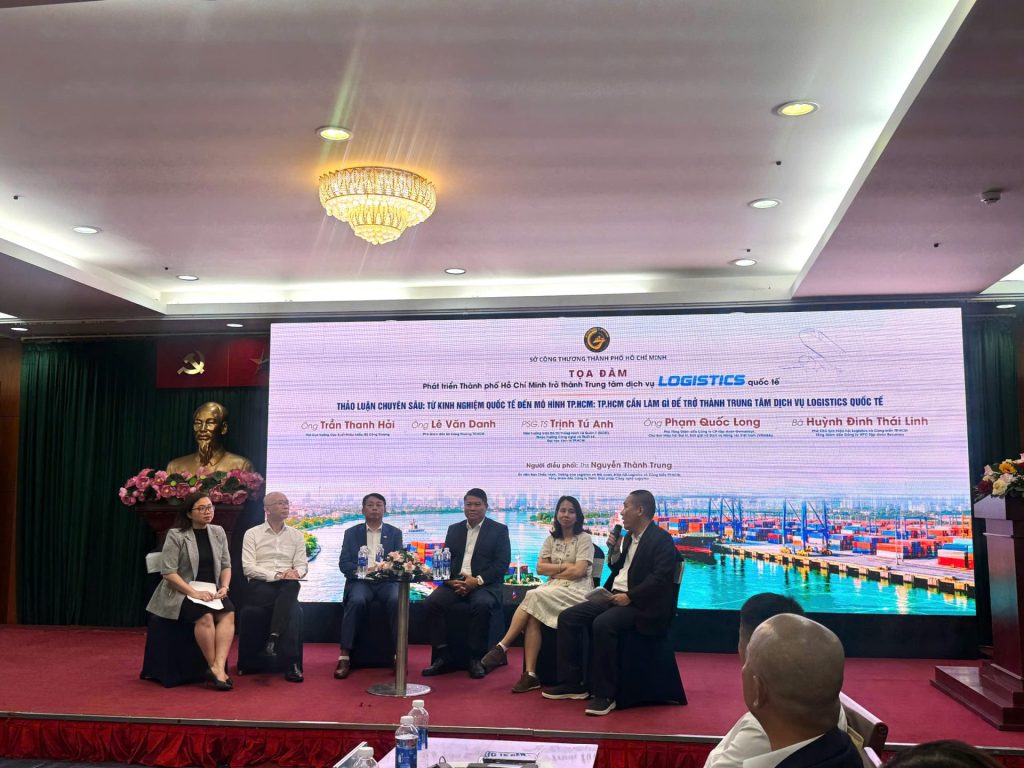
Panel discussion: “From International Experience to a Ho Chi Minh City Model: What Does Ho Chi Minh City Need to Do to Become an International Logistics Services Center?”
Mr. Tran Thanh Hai, Deputy Director General of the Agency of Foreign Trade under the Ministry of Industry and Trade, stated that transforming Ho Chi Minh City into an international logistics center requires a combination of several key conditions, ranging from policy mechanisms and infrastructure to cargo availability. Alongside tailored policies and favorable infrastructure conditions, logistics businesses themselves need to proactively strengthen their capabilities, expand into international markets, build partner networks, and seek global customers.
According to him, businesses that limit their operations to the domestic market will find it difficult to generate significant added value and strengthen their position in international supply chains. The Ministry of Industry and Trade is implementing programs to support businesses in expanding into global markets and internationalizing their operations, thereby contributing to the competitiveness of Vietnam’s logistics sector as a whole and Ho Chi Minh City in particular.
For its part, the City’s Department of Industry and Trade expects the seminar to help identify key bottlenecks in logistics development, propose practical and feasible solutions, and clearly define the responsibilities of the City, issues requiring recommendations to the central government, and areas requiring coordination with businesses, associations, research institutions, and training providers.
The outcomes of these discussions will provide a basis for the Department of Industry and Trade to consolidate recommendations and advise the Ho Chi Minh City People’s Committee on developing and implementing solutions to transform the City into an international logistics services center, thereby strengthening Vietnam’s position in global logistics networks and supply chains.
Read more: HERE