


Ministry of Industry and Trade Issues Criteria for Classifying and Rating Logistics Centers: Towards an Integrated and Modern Logistics Infrastructure System

vlimonamedia
26/11/2026


On November 19, 2026, the Ministry of Industry and Trade issued Circular No. 71/2026/TT-BCT, stipulating criteria for the classification and grading of logistics centers. The Circular establishes a unified framework for assessing the scale, capacity, level of modernization, and role of logistics centers across Vietnam. It also provides regulations on the self-declaration, updating, and utilization of logistics center information on the National Commercial Infrastructure Database.
This marks an important step towards developing a transparent logistics infrastructure system with clearly defined classification standards, aligned with the requirements for multimodal connectivity, digital transformation, and green development.
1. Establishing a Unified Set of Criteria for Logistics Centers
Under Circular No. 71/2026/TT-BCT, the classification and grading of logistics centers are determined based on several groups of criteria, including:
- Location and connectivity with transport infrastructure;
- Scale and cargo handling capacity;
- Service coverage and operational functions;
- Capacity to provide logistics services;
- Technical systems, technology, and level of automation;
- Green infrastructure, environmental protection, and sustainable development;
- The center’s role within the logistics network.
The assessment goes beyond land area or warehouse scale, taking into account operational performance, supply chain connectivity, technology adoption, and the capacity to provide logistics services.
2. Three-Tier Classification System for Logistics Centers
The Circular stipulates that logistics centers are classified into three grades, corresponding to their respective operational scope, scale, and operational capabilities.
| Criteria | Grade I – International/National | Grade II – Regional | Grade III – Provincial |
|---|---|---|---|
| Area | 20 hectares or more | 10 to less than 20 hectares | 3 to less than 10 hectares |
| Handling capacity | ≥ 3 million tons/year, or ≥ 200,000 TEUs/year, or ≥ 35 million orders/year | 1 to less than 3 million tons/year, or 70,000 to less than 200,000 TEUs/year, or 10 to less than 35 million orders/year | Less than 1 million tons/year, or less than 70,000 TEUs/year, or less than 10 million orders/year |
| Transport connectivity | At least 2 modes of transport, with connections to expressways or major national highways | Direct connection to at least 1 mode of transport | Transport connections to markets, production zones, or supply sources |
| Technology | WMS Level 1 | WMS Level 2 | WMS Level 3 |
| Automation | Advanced technical, operational, and monitoring systems | At least 30% of key processes automated and data-connected | At least 10% of key processes automated and data-connected |
| Service coverage | National and international | Regional and inter-regional | Provincial and urban |
Note: WMS stands for Warehouse Management System.
Grade I Logistics Centers – International and National Logistics Hubs
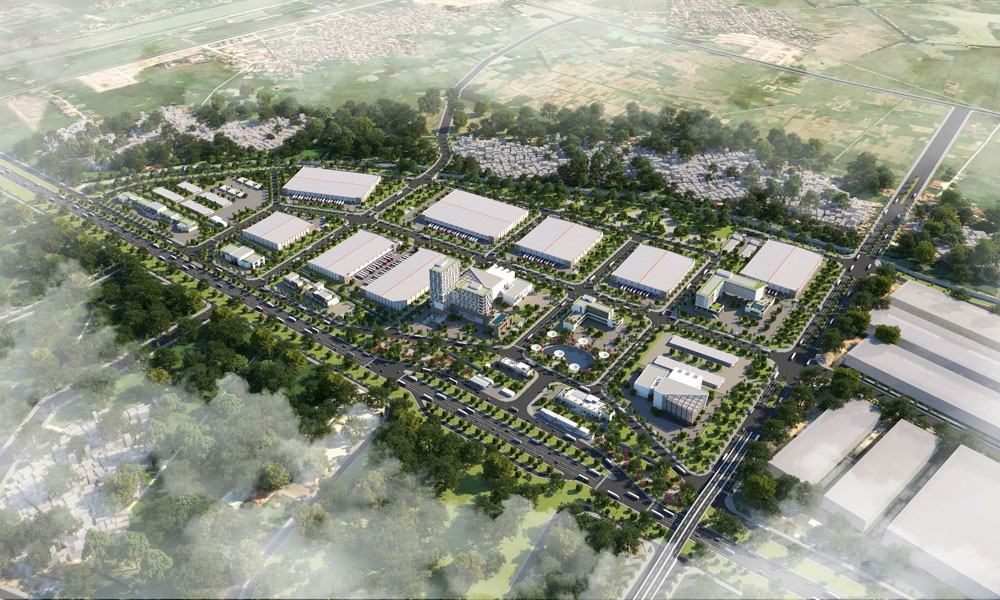
Grade I logistics centers are designed to serve as key hubs connecting national and international supply chains, linking regional logistics centers with seaports, airports, border gates, industrial parks, economic zones, and major production and consumption centers.
To qualify for Grade I, a logistics center must have direct access to at least two modes of transport, cover a minimum area of 20 hectares, and handle at least 3 million tons of cargo annually or an equivalent volume measured in TEUs or number of orders.
Beyond scale, Grade I centers are subject to stringent requirements for technology infrastructure, security, operational continuity, Level 1 Warehouse Management Systems (WMS), 24/7 monitoring, and contingency solutions to ensure uninterrupted logistics operations.
Grade II Logistics Centers – Regional Connectivity Hubs
Grade II logistics centers play a role in organizing and coordinating cargo flows within and across regions. With an area ranging from 10 to less than 20 hectares and an annual handling capacity of 1 million to less than 3 million tons, these centers must meet requirements for transport connectivity, operational capacity, and technology adoption.
Notably, the Circular requires at least 30% of key processes to be automated and electronically data-connected, alongside the application of at least one modern digital technology to optimize operations.
Grade III Logistics Centers – Provincial-Level Logistics Services
Grade III logistics centers are designed to serve cargo circulation and distribution needs within provinces or urban areas, connecting consumer markets with production zones and major supply sources.
With an area ranging from 3 to less than 10 hectares, these centers must meet transport connectivity requirements, adopt Level 3 Warehouse Management Systems (WMS), and ensure that at least 10% of key processes are automated and electronically data-connected.
This approach helps define the role of local-scale logistics centers within the overall logistics network, rather than assessing them solely based on warehouse size or operational area.
3. Classification of Logistics Centers by Function and Operational Characteristics
In addition to grading based on scale and capacity, the Circular identifies five types of logistics centers:
- Transport-mode-based logistics centers: Seaport and airport logistics centers;
- Industry-specific logistics centers: Agricultural, fisheries, industrial, and special cargo logistics centers;
- Logistics centers serving export processing zones, free trade zones, and non-tariff zones;
- Border and border-gate logistics centers;
- E-commerce logistics centers.
To qualify under the classification criteria, centers must meet requirements for transport connectivity, cover an area of at least 3 hectares, provide at least three logistics services, apply software and electronic data connectivity in management and operations, and comply with requirements for environmental protection and green energy infrastructure.
Classification according to operational characteristics helps identify the specific role of each center within the supply chain network, ranging from port and industry-specific logistics to e-commerce logistics and logistics services supporting import-export activities.
4. Digital Transformation and Green Development as Key Performance Criteria
One notable feature of Circular No. 71/2026/TT-BCT is the incorporation of requirements for technology, automation, data connectivity, and sustainable development into the classification and grading framework for logistics centers.
These requirements are reflected across several areas:
- Warehouse Management Systems (WMS): Classified into three levels, ranging from basic inbound, outbound, and inventory management to integrated transportation management, cargo identification, and data connectivity with external partners.
- Automation and data connectivity: Minimum automation rates are established for key operational processes at Grade II and Grade III logistics centers.
- Renewable energy: Requirements and recommendations are introduced, depending on the classification level, regarding the use of or development of plans for renewable energy adoption.
- Environmental protection: Requirements include wastewater treatment systems and the collection, recycling, or reuse of packaging and materials, as appropriate.
- Green transport infrastructure: Provision of parking areas, electric vehicle charging stations, or suitable green energy supply infrastructure according to operational scale.
These criteria demonstrate that the competitiveness of a logistics center will no longer be determined solely by its land area, location, or handling capacity, but also by its level of technology integration, operational efficiency, data connectivity, and environmental responsibility.
5. Self-Declaration and the Development of the National Logistics Infrastructure Database
Under Chapter III of the Circular, organizations and individuals responsible for managing and operating logistics centers are required to conduct self-assessments, determine the type and grade of their centers, publish relevant information, and take legal responsibility for the accuracy of the information disclosed.
The self-declared information covers the following key areas:
- Logistics center identification and general information;
- Classification type and grade;
- Area and cargo handling capacity;
- Transport modes and connectivity capabilities;
- Logistics services provided;
- Main cargo categories and service coverage;
- Technology systems and level of digitalization;
- Green infrastructure, standards, and management procedures;
- Safety, security, and fire prevention and fighting measures.
During the period before the National Commercial Infrastructure Database officially becomes operational, organizations and individuals are required to publish information on their official websites. Within five working days of completing the publication or updating process, the relevant entity must notify the competent state management authority where the logistics center is headquartered, providing the publication link and a copy of the self-declared information.
Once the database is officially operational, information declaration and updates will be carried out directly through the system.
The National Commercial Infrastructure Database is intended to serve as an information resource supporting state management, policy planning, logistics infrastructure development strategies, and the connection between supply and demand.
6. Implications for Logistics Businesses and Infrastructure Development Strategies
The issuance of standardized criteria for classifying and grading logistics centers has significant implications for state management agencies, infrastructure investors, and logistics service providers.
For businesses, the criteria provide a basis for reviewing existing capabilities, identifying the position of their logistics centers within the logistics network, and developing investment and upgrading plans. Requirements concerning multimodal connectivity, management technology, automation, operational safety, and green infrastructure may become important factors in their long-term development strategies.
For investors, a unified classification and grading framework helps facilitate project scale assessment, infrastructure development planning, identification of target market segments, and greater transparency in information regarding logistics center capabilities.
For state management agencies, the classification system and database will improve the ability to monitor existing infrastructure, identify gaps in the logistics network, and support the development of appropriate planning and policies for each region.
However, the self-declaration of a logistics center’s grade and type under the Circular does not replace any licenses, recognition decisions, certificates, or documents confirming eligibility under relevant specialized legislation. Therefore, businesses must continue to ensure full compliance with applicable legal requirements concerning investment, construction, business operations, environmental protection, safety, and operational activities.
7. A Step Forward in Shaping Vietnam’s Logistics Center Network
Circular No. 71/2026/TT-BCT establishes a framework of criteria for identifying, assessing, and classifying logistics centers according to their scale, functions, capacity, and level of development. This is not merely a classification based on land area, but also reflects a broader strategic direction towards developing an interconnected logistics infrastructure network spanning national, regional, and local levels.
As Vietnam continues to expand its import-export activities, e-commerce, manufacturing, and distribution sectors, the standardization of information and assessment criteria for logistics centers is expected to enhance transparency, encourage infrastructure investment, strengthen supply chain connectivity, and improve the competitiveness of the national logistics sector.
Businesses investing in, managing, and operating logistics centers should proactively review the relevant criteria and assess their existing infrastructure, operational capacity, technology systems, and sustainable development requirements in preparation for self-assessment, information disclosure, and updates in accordance with regulations.
Source: Circular No. 71/2026/TT-BCT dated November 19, 2026, issued by the Ministry of Industry and Trade, stipulating criteria for the classification and grading of logistics centers.
Tag